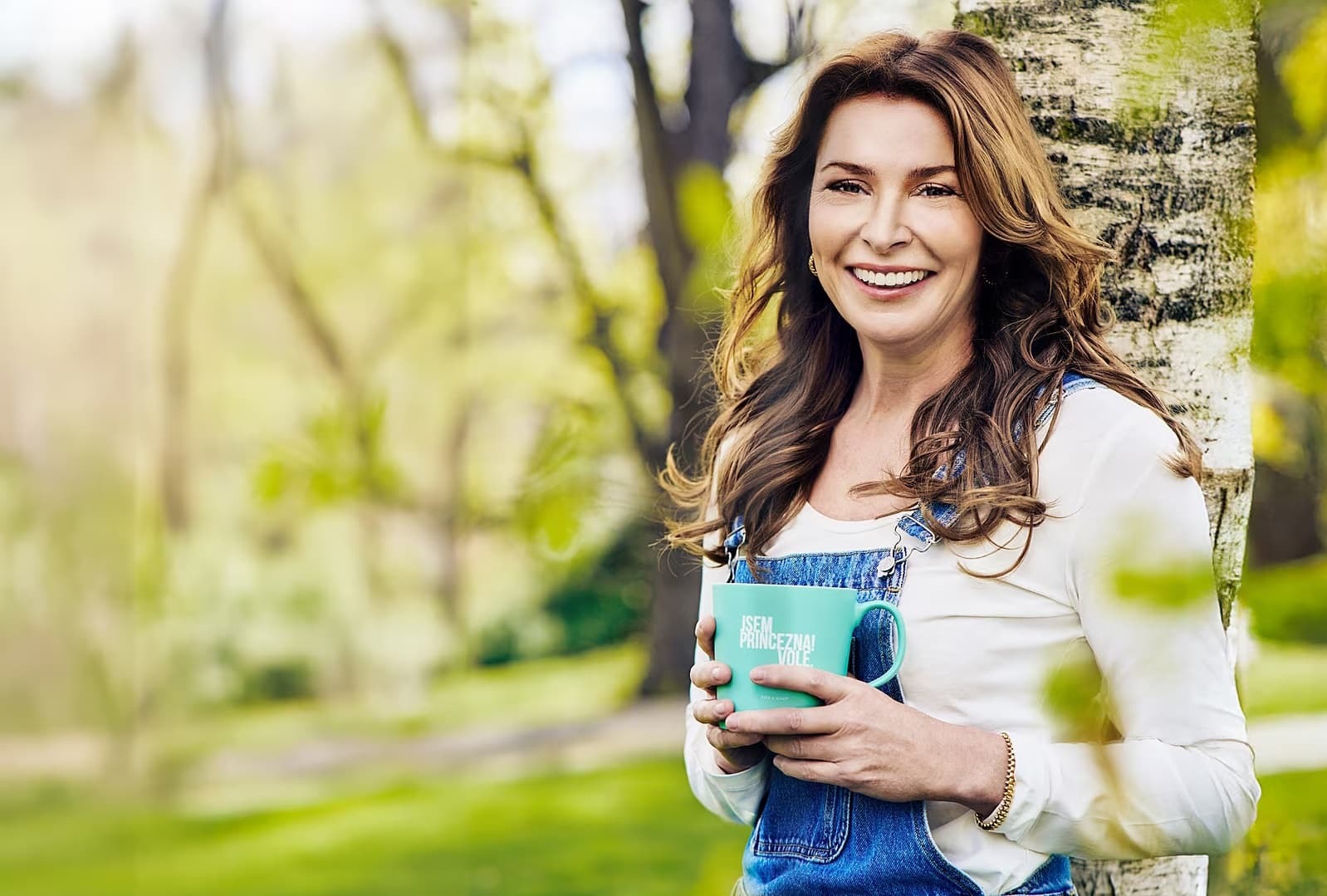
Hi, I'm Ivana.


Waiting Is Not a Strategy. Let’s Not Wait for a New Stability
Europe today does not feel like a continent in crisis. Rather, it feels like a continent in a waiting room. But waiting is not a strategy. Let’s not wait for a new stability.
We are waiting for the war to end. Waiting for cheap energy to return. Waiting for Germany to catch its breath again. Waiting for inflation to disappear for good. We are waiting for someone else to come up with a solution. But waiting is not a strategy. It is a quiet form of resignation.
Czech Republic has a peculiar talent: surviving everything. The monarchy, occupation, normalization, transformation. We are a nation that endures. But endurance alone is not enough. Endurance is a passive virtue. What we need now is active resilience.
Resilience is not just a psychological concept; it has many forms. It can be understood as a political-economic discipline. It can mean the ability to act before circumstances force us to, or to invest when others hesitate. It means stopping the habit of excusing our own inaction by pointing to the complexity of the world.
The war in Ukraine is not just a foreign event. It is a test of whether Europe can still act as a civilization that wants to survive in a competitive world. And for Czechia, it is a test of whether we want to be subcontractors of history, or its co-authors.
Let's not wait for a “new stability.” Stability does not occur naturally. It is produced. It is produced by the decision that energy is priority number one - not a topic for yet another round table. It is produced by a state that accelerates the approval of investments instead of suffocating them with forms. It is produced when schools prepare children for a world of artificial intelligence, not for a world that is ending. It is produced when we admit that defense and demography are not abstract numbers, but matters of survival.
Yet there is an even deeper level. A country’s resilience begins with the resilience of the individual. Each of us today faces the same choice as the state: resignation or initiative. Resignation has a thousand forms - cynicism, constant complaining, sharing yet another wave of outrage on social media. Initiative is less visible but stronger: to educate oneself, to start businesses, to improve one’s qualifications, to raise children to be responsible, to invest in one’s health, not to rely solely on the state.
The state can create the framework. But the character of a society is formed by its people.
Perhaps we have grown accustomed to the comfortable model of the past thirty years: the world was relatively safe, energy was accessible, globalization was advantageous. Now we live in an era when everything is more expensive - energy, security, stability. The future itself has become more expensive. We will have to earn it again.
It is easy to say that everything is the fault of Brussels, Moscow, Washington, or Berlin. It is harder to ask: What will we do?
Czechia has an advantage we tend to underestimate. We are a small country. That means change can be faster, if we decide to pursue it. We do not have to wait for the consensus of twenty-seven states. We can be a laboratory of a functional energy policy, rapid digitalization, and an efficient state. We can be a country that understands that competitiveness is not a slogan, but everyday work.
This is not about hysteria. It is not about wartime mobilization. It is about deciding to stop behaving as if the current moment were merely a transit station on the way back to the past. It is not. We are at the threshold of a long period in which the world will be neither cheap nor simple. And precisely for that reason, we need the courage to stop waiting.
We cannot directly influence when the war will end. But whether we emerge from it stronger or more exhausted, that we can influence. The real question is not: When will this end?
The question is: What will we do before it catches up with us?
Big thanks to Forbes for the invitation to Lepší Česko 2025
I want to thank Forbes very much for the invitation to the conference A Better CZ 2025 (Lepší Česko 2025).
For my speech, I wrote down a lot of things I wanted to say, but instead I said other things that came to my mind in the moment🙃
Irena very kindly mentioned my experience as a single mother of several children who had to really hustle and also went through some tough times. The key word? Resilience.
If you want to succeed, resilience is of course essential. That means that even when a woman doesn’t feel like it and stands in front of a door where some deal is being discussed, she has to take a breath and walk into a room full of men with a smile. It’s hell. Everyone is of course looking at you and thinking: “So, sweetheart, what are you bringing us?” They look at your legs first, then up, and then whether you’re all made up and pretty. And only after they evaluate that, their brains either completely shut down, or if not, they start talking business. So I’m actually happy to be the age I am now 😎
We women still somehow constantly have to justify ourselves, to prove that we’re good enough for the position we’ve chosen, and the trust in our abilities is often very low from the start. We see that in politics as well.
Our society is simply misogynistic.
I feel that the older men get, the more afraid of women they are. And women in our society still seem to have the model coded from home that as mothers they mostly take care of the family on their own, and by doing so automatically take on all the care of the household and children.
And because today’s women still viewed and experienced this at home with their own mothers, they tend to talk too much about it instead of saying it calmly and firmly in a way that a man understands and wants to do it himself, like a knight.
As women, we often position ourselves too confrontationally instead of finding ways that won’t immediately put men in opposition.


Today it probably all clicked for me. In Rwanda
Today it probably all clicked for me. In Rwanda. I’m here briefly on an expedition of our Solvo Institute together with Professor Miroslav Bárta. We’re studying a society run by women. They hold 60% of the seats in parliament.
Rwanda, in East Africa, is often called the “land of a thousand hills” thanks to its mountainous terrain. In size it’s comparable to Moravia, but its population is closer to Czechoslovakia before the split—around 14 million. It might not seem like a particularly remarkable country, apart from the landscape, but it is different.
Rwanda has a very young population - more than 60% of people are under 25 and as I’ve said, women have a powerful voice in this African country. And this is despite the fact that most of the population is religious, mostly Christian, with a tiny Muslim minority, and as is “known from the Bible,” woe to the man ruled by a woman.
Yet here they rule almost exclusively.
How is that possible? It’s simply the result of developments over the last 30 years. The 1994 genocide was a tragedy during which about 800,000 people were killed in 100 days, mainly members of the Tutsi ethnicity - above all men. Since then, Rwanda has undergone fundamental renewal. Perhaps the foundations were laid by earlier colonialism - Protestant Germany and Belgium - and the resulting better status of Protestant daughters in society, who were more often regarded as partners to their husbands.
The genocide left 800,000 dead, shattered families - women with children - and thousands of orphans. It wasn’t unusual for one or two women to live under one roof with a crowd of ten or fourteen children. Who would feed them? They had no father and often no mother either. The survivors had to take care of themselves. These women started from nothing. They would milk a goat, if they had one, and instead of giving the milk to the children that day, they would sell it to buy flour, and so on. From small earnings to larger ones and eventually to big business. From selling surpluses to small-scale production in workshops, to shops and even factories. Society also had to be organized and educated. Women quite naturally moved from the home into employment or entrepreneurship, because without them society would not have been rebuilt. They were needed. They became an indispensable part of the success of the new Rwanda.
I always say that women’s success rests on far greater effort than men’s. This isn’t to diminish men’s achievements—it’s just practical reality. Generations of women who wanted to succeed had to do not only their so-called “women’s work,” i.e., running the household, caring for children, working in the fields or garden, and only then could they devote themselves to what offered an “upside”: education, money, success. I’m not exaggerating; this applied even to women from affluent backgrounds. “First you’ll learn to cook, sew, and embroider, and then you can sit down to that crazy physics or mathematics, or write a short story.” It’s centuries of women’s hard labor. And those who did not toil were entirely dependent on men - first their fathers, then their husbands.
If we look at the history of wars, the same scenario repeats over and over. Men go off to fight and women take up their roles as breadwinners and protectors of the family. Women who had previously had to obey their husbands’ decisions in everything or struggled to get their (often correct) opinions heard, began to run the household or take jobs; they had to assume the position of family breadwinner. And they had to manage it. The family that depended on them simply would not survive otherwise. How could they manage without preparation?
For one thing, they had always been present throughout the process of making a living, and we all know the proverb: “Necessity taught Dalibor to play the fiddle”- that is, when there’s no other choice, we accomplish the impossible.
Besides caring for the family and ensuring production needed “in the rear” during war, from World War I women were part of the military as nurses, telephone operators, intelligence officers, scouts, spies. During World War II the U.S. had the Women’s Army Corps (WAC). Within it there were Army Postal Units, where women handled sorting, delivering, and recording field mail.
The best known was the 6888th Central Postal Directory Battalion—an all-female African American unit sent in 1945 to England and later to France to process a massive backlog of mail for American soldiers.
Their motto was “No Mail, Low Morale.” Why am I speaking so extensively about women’s involvement in war? Because when crisis comes, woman or not, it’s necessary to take on even “men’s” professions; gender doesn’t matter.
The fates of women who served during World War II, in the army, auxiliary corps, or factories, varied by country and social situation.
In the U.S., when soldiers returned, men were massively favored for jobs, so many women had to leave factories and auxiliary services. Only a small number continued, and that was more the exception.
African American women (such as those from the 6888th Postal Battalion) also faced segregation and discrimination upon returning, and their contributions were officially recognized only decades later.
In Great Britain the situation was similar. Society valued their contributions, but pressure returned for the traditional female role of wife and mother.
Wehrmachtshelferinnen - the Wehrmacht’s female auxiliaries - telephone operators, clerks, nurses, operators of searchlights and anti-aircraft guns, became unnecessary after the Reich’s defeat; most were interned, interrogated, and then returned to civilian life.
Those who served directly in the NSDAP apparatus (the SS-Helferinnenkorps) were seen as collaborators and sometimes faced punishment or social stigmatization.
In the USSR, over 800,000 women served during World War II, from pilots to snipers. After the war, most faced severe social injustice. Society acknowledged their contribution, but again the pressure to return to the traditional roles of wife and mother prevailed. Demobilization ultimately sent women back home to their original roles. Even so, the war changed perceptions of women’s work and was one of the catalysts for later feminist movements (especially in the 1960s).
And now, what about the men?
Rwandan men are distinctive, tough, and temperamental. They’re not thrilled about self-confident women and Rwandan women are self-confident. They don’t show it at first glance, though. They are soft in communication and try to be accommodating. They’re kind. They’re not like South American women (my apologies here) - forthright and fiery. With their kindness and suppleness they try to defend their position. But when pressure comes and men use the tactic in communication of “either you back down or I leave the family,” then, to preserve the family - which holds enormous value for them - they would rather step back from their positions and submit. They want a father for their children; they want a family for themselves and their children. They pay for it with their independence and self-reliance. In my view this is given by the biological need of a mother to protect her young. Even after what they have experienced or heard from their older sisters, Rwandan women have managed to preserve their mysterious femininity, which springs precisely from an awareness of their role as mothers. And it’s not only local women who behave this way. The biology of motherhood is potentially in each of us; that’s why emancipation develops in waves. When humanity faces greater danger, both sexes fight - each with their own weapons. When there is peace and quiet, the lions lounge in the sun and the lionesses hunt and provide for the cubs.
Thirty years have passed since the genocide. Today Rwanda is considered one of the safest and cleanest countries in Africa. Kigali is a modern city with rapidly growing infrastructure. And women here still, even after 30 years, hold a majority position in the governance of the country and public affairs. The more time passes since the genocide, the harder it is to maintain the position they won.
We, women in the Czech Republic, can still only dream of such representation in parliament.
What, for me, creates the feeling of a true home?
Definitely its distinctive scent—ideally the smell of some delicious sweet pastry. When I bake, I leave the doors open so the aroma of a freshly baked bundt cake can spread through the whole place. I’m making a mental note that it might be nice to produce and sell a fragrance like that. I’ll say more in this interview about interiors, apartments, and home.
Are you resilient?
Maybe it’s time you took, just like I did, our brand-new resilience test, developed here at Solvo. And by resilience, we don’t mean the resilience of a nation as a whole, but of each individual — of you — from many different angles.
How adaptable are you? What values do you live by? Do you trust our institutions, the state, for example? Do you get enough physical activity to benefit your health? And what about your mental health? Are you financially prepared for a crisis?
Our resilience test will get you thinking a little more deeply about how and why you live, and how ready you really are for the unexpected. So far, we’ve found that the average resilience of Czechs is just 44%. Isn’t that a little low? So how resilient are you? The questionnaire takes about twenty minutes. 😎
We created an app for a peaceful divorce
I know — something like that probably doesn’t exist. Or maybe it shouldn’t exist, at least not entirely. I think it should still hurt a little. Not too much, though. I understand that you probably still care about the other person, even if you no longer want to stay married to them. Divorce is always hard for both sides — and even harder when children are involved.
So with this app, I’m trying to take some of the emotion or stress out of the process. The more rationality, the better — for everyone involved, and most importantly, for the kids. That’s the goal of Divorcio. if a divorce has to happen, let’s save as much pain and as many tears as possible. And if you’re not getting divorced, well, you can at least check out our mascot. I chose a koala. Why? Just because. 😎

Our Living Room is Featured in Offices of the Year
We've been here a year. I still sometimes call it "the office" out of habit, but every time I do, I feel a little guilty. Because really, it's the Living Room. Our Living Room at Masaryčka.
For years, my companies and our nonprofits shared a house on Vlastislavova Street in Nusle (not to be confused with Vladislavova). But I'd been dreaming of moving to Masaryčka for a long time.
When it finally happened, I furnished the space my own way, using what we had. I love recycling. And honestly? I was pretty shocked when the Offices of the Year jury gave us an award.
My Interview in the Magazine PročNe
The lovely Gabriela Marešová interviewed me recently, and I think it turned into a really nice print feature. I'd be happy if you gave it a read. I talk about our inner jealousy, of course about Lunches for Kids, and why we need to raise children with the understanding that they are free beings, to raise them as free people who can freely choose whom they love, and whom they don't.

Thank you, Forbes
I was truly honored that Forbes Czechia recognized not just my business work, but also what we’re striving for at the Solvo Institute — and ranked me in the top ten of the Most Influential Women in Czech Republic.
At Solvo, we often struggle to clearly and concisely explain what we do and what we think about. So let me try to sum it up in one sentence — a kind of mini elevator pitch:
We explore what people in Czech Republic truly feel, and what they really want.
But I also often say: We’re looking for shared values, the ones most Czechs agree on. And we want to formulate them into Seven Tasks for any future government that takes office after the October elections. Because, as always, there’s a fight over who will govern and far too little interest in what they plan to do. That’s how we end up with coalitions like SPOLU, where the parties’ programs cancel each other out, leaving voters confused and dissatisfied.
I also often mention that we’ve just completed a major study on Czech Gen Z, which we’ll be presenting this Monday at the VOGUE CS conference.
And lately, I’ve been telling everyone that we’re finalizing our large-scale Resilience study, where people can measure their own resilience using a completely new kind of test.
But what I probably say most often is this: We’re putting together our own answers to the questions our children ask us — and the ones we ask ourselves.

This would have been hard to make up, it just happened
Unfortunately, I couldn't accept the beautiful award for Most Influential Woman from Vogue CS, an award that recognized our Solvo Institute as Social project of the Year. So my three daughters picked it up for me: from left to right, Olga, Pavla, and Ivana.
I have to admit, seeing them there moved me. And yes, I was a little jealous of the party at the Fairmont Golden Prague.

Why Solvo is So Close to My Heart
Sometimes I think I don't want to do anything else but our think tank, Solvo. To study and try to understand the thoughts, moods, desires, and fears of the Czech population. Of women. Of men. To explore childhood and see the world through the eyes of children growing up in our country. To experience that daily spark and depth in discussions with the experts on our Advisory Board. Even the conflicts—or as my colleagues call them, the “fights”—fought hard, but honorably.
We put in our logo, perhaps not too modestly: Top-tier data and unmatched expertise. But vision should never be modest. It should be grand, even bold. It should be the biggest it can possibly be. What did Steve Jobs say to the Pepsi CEO when he tried to recruit him to Apple? “Do you want to sell sugared water for the rest of your life, or do you want to come with me and change the world?” And we want to change the world. At the very least, here in the Czech Republic. Take a look at our research.
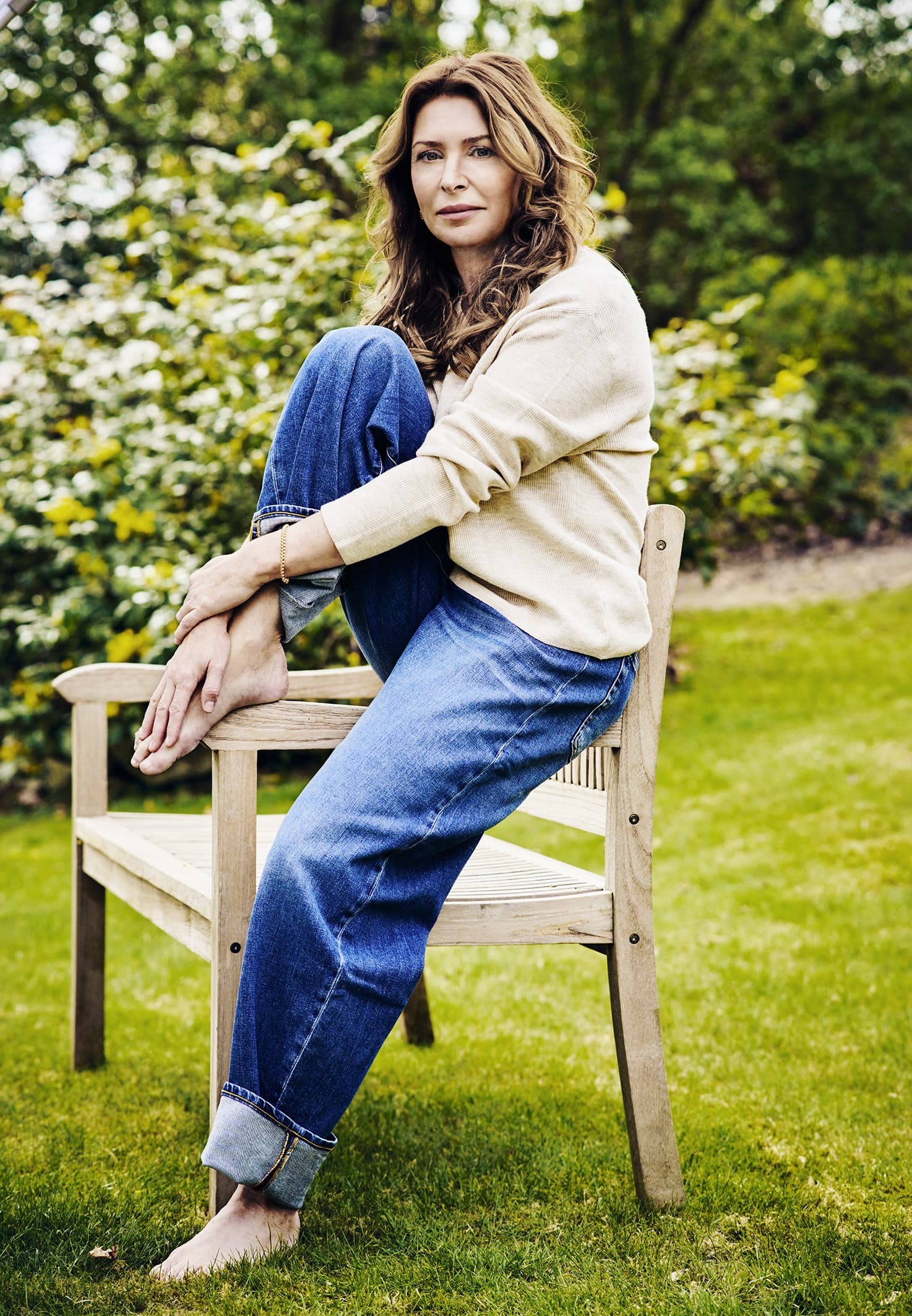
We are Solvo. We seek the values that unite society
I believe in the potential of Czech society. By failing to use it, we’re losing out on hundreds of billions of crowns. That’s why I founded the Solvo Institute – to gather top-quality data and carry out extensive research backed by unmatched expertise.
You might not know that 51% of Czech men believe they are better suited for decision-making roles than women. Or that, for Czech children, dads rank only fourth in importance. And that 50% of Czech children don’t want to live in the country when they grow up. Surprising? Yes. But also crucial.
For Czech children, dad ranks fourth in importance
Dads, wake up! How do Czech children feel? What do they want and who do they love the most? Surprisingly, it’s not you. At our Think Tank, Solvo, we’ve been studying the most important thing of all: our children. And one key finding? Only a third of kids would raise their own children the same way their parents raised them.
Required reading! And even more so if you’re a parent or ever plan to become one.
Are Czech Men in Crisis?
At Solvo, we asked a fundamental question: Are Czech men in crisis? According to Czech women, the answer is yes. But men themselves don’t feel that way. And through our research, we uncovered a wide range of attitudes, from household chores to military service.
We worked on this project for a long time, and I’d really appreciate it if you could take a moment to explore our findings. I believe you’ll find them thought-provoking and inspiring.
How Do Czech Women Feel?
As one female respondent in a focus group said: ‘Women’s household chores are daily, while men’s are occasional.’ And… there’s definitely something to that.
This was our very first research project at Solvo, and we learned a lot from it. Most of all, from the results themselves.
For instance, only just over 50% of women in the Czech Republic feel successful. I believe we’re capable of more and that this number needs to change. You can read the full study too, it would be an honor for us.
And do you know about Lunches for Kids?
Lunches for Kids. Helping 18,000 kids. That's Women for Women. Since 2012. Our biggest and most important project. Maybe you’ve read about us, we’ve been just about everywhere.
But what matters most to me are the individual stories of the children and families we’ve been able to help, whether through a warm lunch, housing, or legal advice. Please, if you know someone who could benefit from our help, send them to Women for Women.
We are opening Family Hub, a new center for family therapy in Prague
Do you feel like things aren't the same at home anymore? Constant arguments? Thinking about separating? Has your child stopped talking to you? Take a moment. Align your emotions, thoughts, and words. Because family is the foundation of everything, at least that's what I believe.
That’s why we created Family Hub, a space offering family and individual therapy, led by top experts.
Amicara, our favorite helping hand
They wrote about us in Forbesu, E15, and even Vogue. And I’m incredibly proud of our team. Not everyone has the chance to attend therapy in person, which is exactly why we created the Amicara app. We’re continuously developing it in collaboration with mental health professionals to help people navigate difficult family situations and emotional challenges.
I’m a proud tester and regular user myself, so I’d love for you to try it out too.

At TKC Group, we understand top-tier interiors
TKC Group is our company. The name is, perhaps surprisingly, an abbreviation of Tykač. Here, I bring together my experience in real estate with modern architecture and a vision for functional urban spaces. I dare say we create masterpieces, each infused with our unwavering commitment to excellence. We've been striving for the perfect product for many years now, and I feel like I'm falling in love with it more and more each day.
Oblík, our oasis of calm
It’s beautiful here. We transformed a derelict farmstead into a breathtaking resort we're truly proud of. Longevity has become a buzzword lately but that’s exactly the approach we’ve embraced at Oblík. Top-tier treatments, wellness, spa, and premium cuisine made from local ingredients.
But enough talk. The best way to understand it? Come see for yourself. We’d love to welcome you.
My Favorite Interior Designer
Kelly Wearstler. Because she speaks to my soul. When I didn’t have much money, I always mixed expensive pieces with old ones from antique shops or flea markets. When you enter a space designed by Kelly, you instantly feel the energy and power. I completely agree with her that perfection doesn’t lie in symmetry and polish, but in unexpected combinations.
I also love taking a historical element and giving it a completely new, modern dimension. Kelly is, to me, a rebel with impeccable taste. I own several of her books, and they are a constant source of inspiration and affirmation for my own design intentions.
What did I tell the magazine PročNe?
The lovely Gabriela Marešová interviewed me, and I think it turned out to be a nice piece. I’d be happy if you gave it a read. I talk there about our inner jealousy, of course about Lunches for Children, and about the need to raise children with the understanding that they are free beings. As free people who can freely decide whom they love — and whom they don’t.
Thank you so much for including me in Vogue Leaders
Just a little over 50% of women in the Czech Republic feel successful. That much we know. So now the question is — what do we do about it? For Vogue Leaders, I had a conversation with editor-in-chief Danica Kovářová and shared a bit of our family history. For example, how my grandmother Růžena almost became the mayor of her village — until my grandfather put a stop to it. You can read the whole story in the interview.

For iDNES about my daughters, dating, and Czech society
In my opinion, a boy should walk a girl home, pay for her, open the door for her, and treat her with gallantry. Not because it’s old-fashioned, but so that the girl feels respected.
This interview for iDNES is one of the warmest and most intimate I’ve done so far. You can read it right now. I’ll be glad if you do.
The most breathtaking view I’ve ever experienced
I’m always captivated by the sight of the landscape or city from a landing airplane.
But if I had to choose just one, it would be the winter view from Piz Nair of the snow-covered mountains surrounding St. Moritz. If it’s a sunny morning, it’s worth being there early. Alone. Without people.
Lino Schmid
CC BY-SA 4.0
Who am I, really? What defines me? My "mosts"
A white buttondown shirt. Its simplicity and elegance make it the universal foundation of my wardrobe. Whether I’m heading to an important business meeting or a casual dinner with friends, a white shirt always provides the perfect base for any outfit. It can be formal when needed, but paired with jeans and sneakers, it transforms into the ideal casual combination. It’s a great companion that gives me confidence and comfort, and always manages to highlight my personality.
Skincare routine I swear by
I'm a bit chaotic, but there are some things I always do. Always. Even after a party, I take off my makeup. And I apply that Guerlain cream.
Where do I go to relax?
To St. Moritz. Home. It's all hills here, and since 2010, this has been home. My husband and I used to come here all the time, it's our favorite place together. Peace and calm.
Where is the best party?
The best party? Of course, on Mykonos. Cold water, constant waiting for something, the whole place feels artificial… and our girls love it. Pretty much all young girls love it.
But personally, I prefer summer in Porquerolles. These are the islands near Toulon in southern France. It feels like you’ve stepped into a Pirates of the Caribbean movie. Amazing food, amazing sunshine, amazing music. But you have to arrive by boat, not by car.
"As women, we should reconnect a bit with our roots. We can hold all the positions we have, but we should also be full of warmth, understanding, and both inner and outer beauty."
This is what I said in the interview. If you'd like to read the full version, here it is.
What am I reading?
Right now, I'm reading books on economics. It's all quite amusing when compared to reality. Or books about how the brain works.
For example, Breaking the Habit of Being Yourself by Joe Dispenza. And then World Order by Henry Kissinger.

These are a few of my favorite photos from Paris, my absolute favorite place in the world, taken by the amazing Jiří Turek. I also really love Melbourne and Buenos Aires.


10 things You Might Not Know About Me
In the morning, we wander around like lost souls, trying to settle into our roles for the day. These days, we're all capable of getting dressed on our own—which makes things a lot simpler.
Breakfast is usually made by my husband. He soft-boils the eggs in the electric kettle, which always amazes and amuses me. He's just great. Besides the eggs, he also peels all kinds of fruit, prepares a fruit platter, and insists that we eat it.
When I was fifteen, I worked for three weeks in a restaurant kitchen somewhere in Prague 9. It was awful, but it also brought me a ton of tips, because people weren’t counting their money at all.
On the right side.
Taylor Swift, Paris, 2023. Phenomenal. She gives incredible physical performances, is natural, and speaks the local language wherever she performs. She really tries. She adapts to the place where she's singing. She’s truly excellent.
And I also remember going to an Olympic concert when I was sixteen.
Salted caramel, because it’s bittersweet. It reminds me of life itself. Even just the way caramel is made.
Barbie. Thanks to her, I learned how to sew on a machine. I made her many outfits from fabric scraps. I admired her proportions and envied her height.
They're adorable, naive. They look at the world from different perspectives that broaden my horizons. They are sensitive, empathetic, and able to grasp the essence of a problem. As if what took us years to figure out was already embedded in their mental programming.
"Chápeš?" (translation: "Do you get it?")
Glasses, phone, shoes, sunglasses, Guerlain fragrance.
Wearing a hat in the garden. I’ll move to Uruguay, herd bulls on my farm, and play polo.
Roast duck with dumplings and cabbage. I can eat it anytime. Even four days in a row, I never get tired of it. It reminds me of childhood. My mom, my grandma.
Picking currants during a summer job. Three weeks. I bought myself a cassette player for 2,400 Czechoslovak crowns. I listened to AC/DC. Or Drupi, I loved him.
A sweet finale: the recipe for ammonium slices from my grandmother
300 g plain flour
500 g butter
500 g powdered sugar
1 egg
2 teaspoons of ammonium bicarbonate
5 tablespoons of milk (or more if needed)
Filling (cream):
500 ml milk
120 g powdered sugar
1 egg yolk
60 g coarse flour (or all-purpose if coarse is unavailable)
200 g butter
Optional: a splash of rum, to taste
Icing:
1 egg white
1 tablespoon warm water
powdered sugar (as needed for consistency)
redcurrant jam
Mix all dough ingredients and divide into two equal parts. Roll each part out to the size of a baking tray (25 x 35 cm). Bake both sheets.
To make the cream: Cook the milk and flour into a thick porridge. Once cooled, whip in the butter, powdered sugar, egg yolk, and rum if desired.
Spread redcurrant jam on the first baked layer, then add the cream. Place the second layer on top. Prepare the icing by whisking the egg white with warm water and gradually adding powdered sugar until thick and spreadable. Spread over the top layer. Chill in the fridge for at least one to two days to allow the flavors to blend and the slices to soften.
Enjoy!